
Problem
Both platforms' content uploading is controlled through the super admin. There was no existing tool for creators to upload on their own. Everything needed to be built from a blank slate.
Outcome
A talent management SaaS platform that simplifies how talent is discovered, booked, and paid globally, securely, and on their own terms through user-friendly platform.
My Role
Timeline
14 days
Insights
Understanding the space before designing it

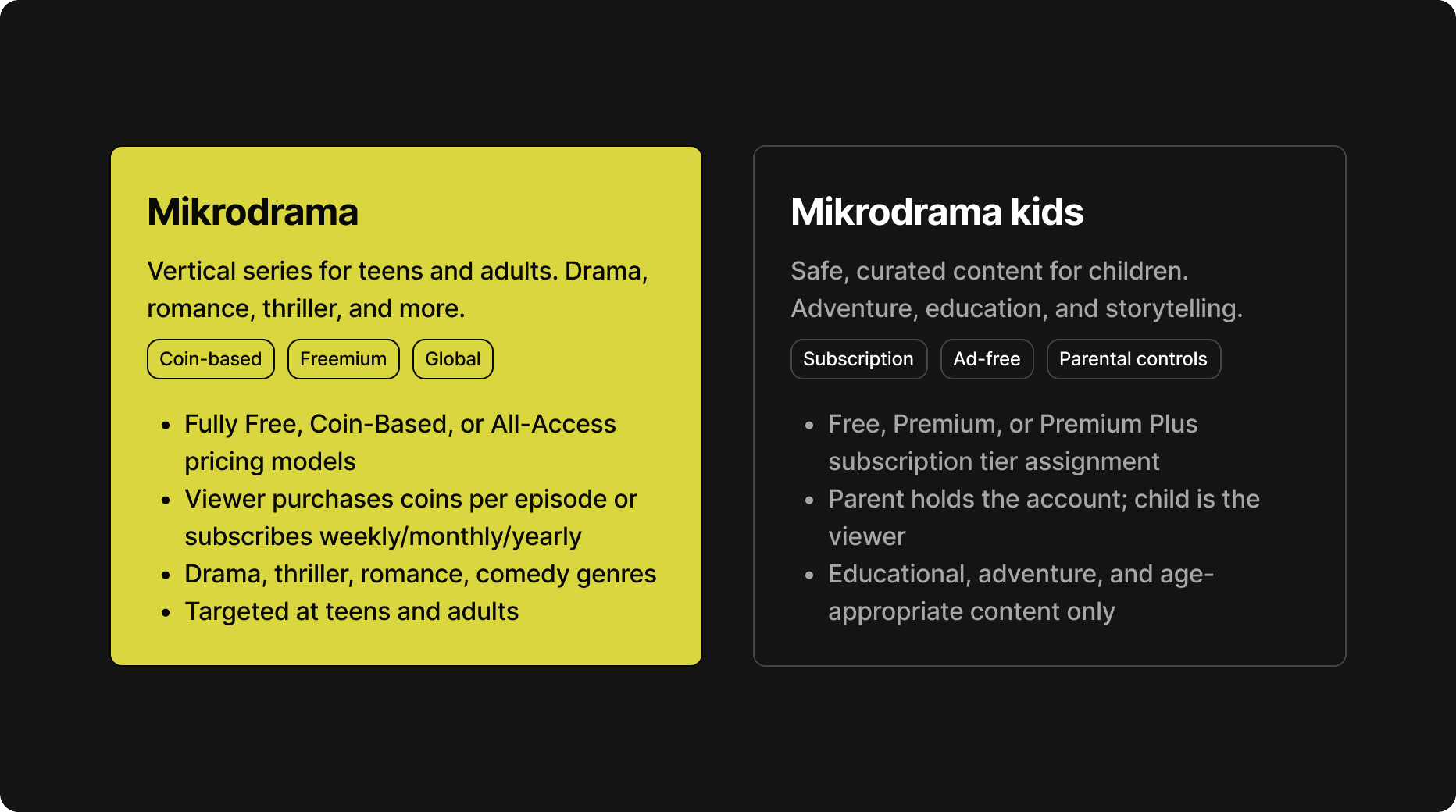
Platform Differentiation
Two platforms, 2 different rules
Information Architecture
How the design came together

Task flow
Five steps, Zero ambiguity

Design System
Reflecting platform's identity & values

User Interface Design



Prototyping
Creator earnings dashboard
The monetization model is currently designed but revenue tracking and payout history screens are the natural next module once the earnings infrastructure is confirmed
Episode-level A/B testing for thumbnails
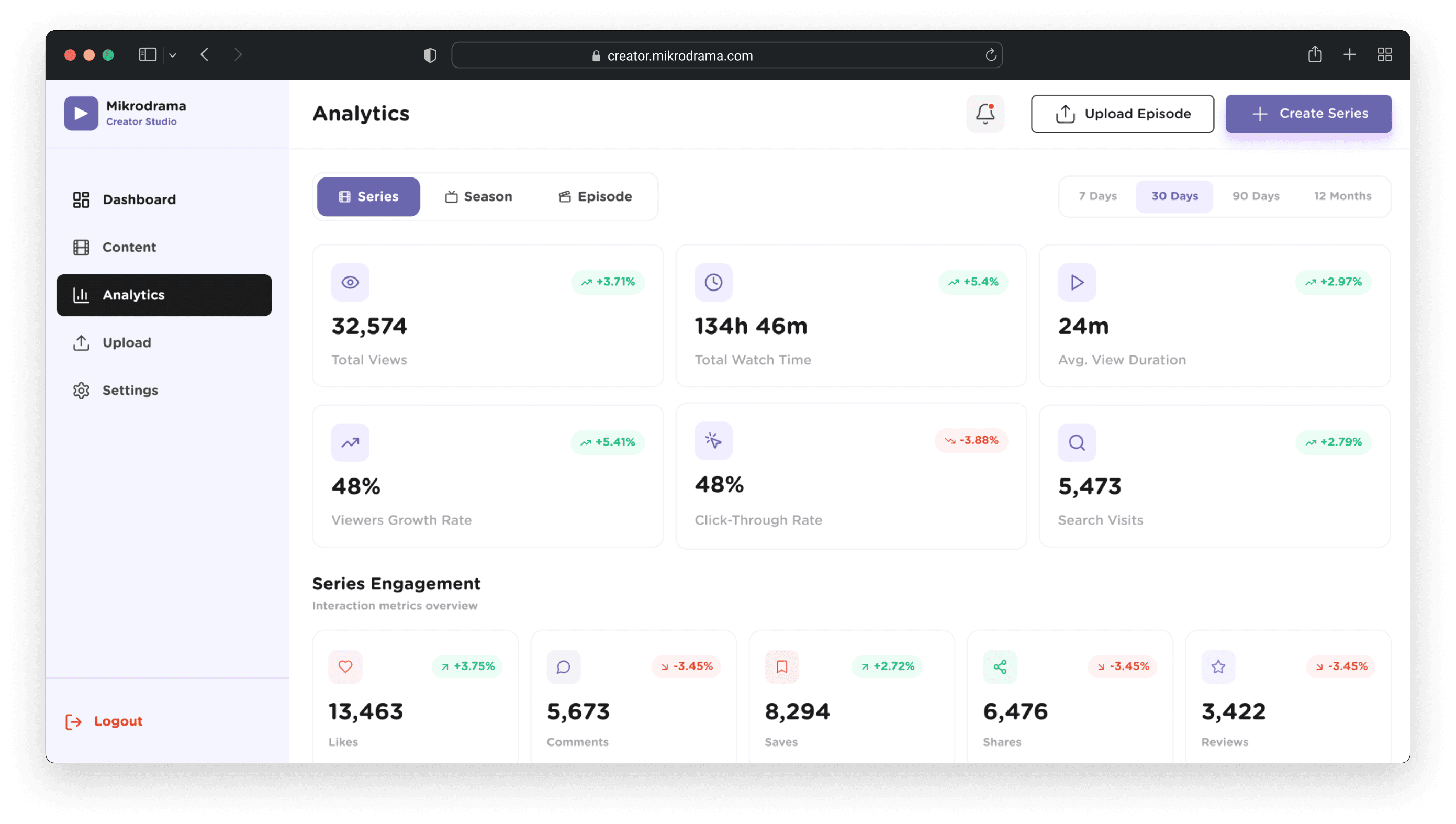
The analytics foundation supports this; surfacing it as a creator action is the next step toward helping creators actively optimize performance, not just observe it
Bulk upload and scheduling
High-volume creators publishing multiple episodes per week need batch upload capabilities and a publishing calendar to manage release cadence effectively
Platform context is a design primitive
When one tool serves two distinct platforms, context isn't a secondary concern, a creator should never be unsure where their content is going.
Progressive complexity beats feature dumping
The five-step upload flow works because it introduces complexity only when the creator is ready for it (platform selection before pricing; series before episodes). The step order isn't arbitrary, it mirrors the logical dependency chain of the decisions.
AI accelerates iteration, not direction
Using AI in the ideation phase genuinely compressed the layout exploration timeline. But the valuable work of design judgment remained (platform's dual-audience structure, optimaal upload flow etc.)